
Foundation Masters · Structural Strengthening
Carbon Fiber Structural Repair & Reinforcement
Externally bonded carbon-fiber reinforced polymer (CFRP) systems used to repair and strengthen concrete structures, installed by an experienced field crew following established manufacturer procedures.
Foundation Masters, LLC performs carbon fiber structural repair and reinforcement on bridges and transportation structures, parking garages, concrete beams and columns, structural walls, suspended slabs, industrial and marine structures, and deteriorated concrete components. When a structure requires an engineered increase in capacity, project-specific structural design and installation are coordinated as part of the repair program.
Overview
Strengthening concrete without demolition
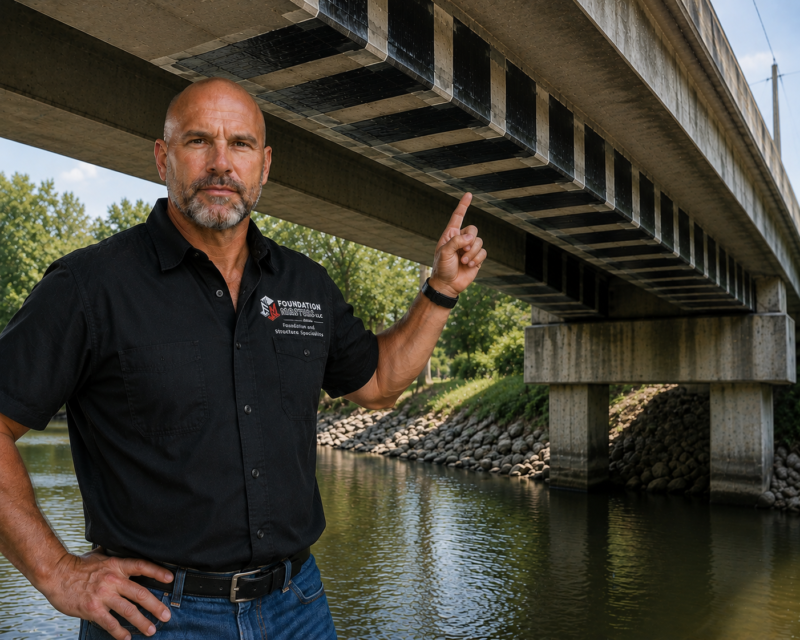
Carbon-fiber reinforced polymer is a high-strength carbon fabric bonded to prepared concrete with a structural epoxy. Fiber-reinforced polymers are a proven technology for upgrading and strengthening concrete, masonry and steel. It is used for flexural strengthening, shear upgrades, column confinement, seismic upgrading and the repair of damaged or corrosion-affected members.
Because the system is thin and lightweight, CFRP can provide structural reinforcement with minimal added dead load and without the extensive demolition associated with many conventional strengthening methods. That makes CFRP well suited to structures that must remain in service, such as bridges carrying traffic, operating parking structures and active industrial facilities.
Foundation Masters brings substantial field experience installing these systems on real structures. We work with established professional repair systems, including Sika structural strengthening products such as SikaWrap® carbon-fiber fabrics and Sikadur® epoxy resins, and we install them to the manufacturer’s current procedures.
Applications
Where carbon-fiber reinforcement is used
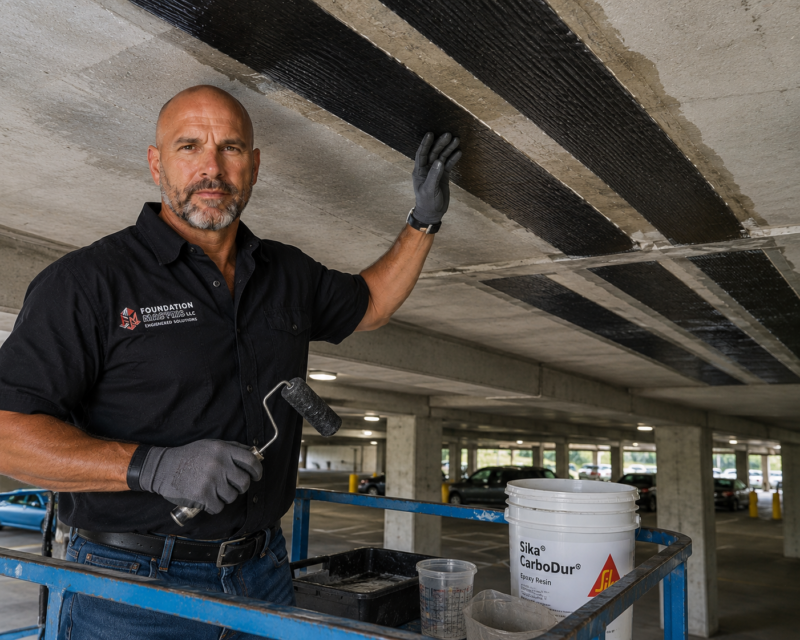
CFRP is applied where an existing concrete element must carry more, resist better, or simply last longer. Typical Foundation Masters applications include:
Installation
A disciplined field process
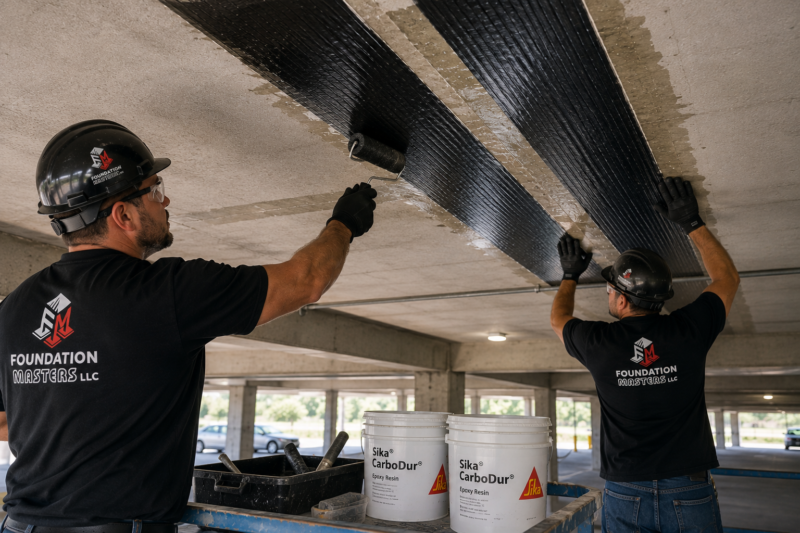
Carbon-fiber performance depends on how the system is installed. Our field process follows the sequence the manufacturer’s documentation requires.
Evaluate
Confirm substrate condition and application requirements.
Prepare
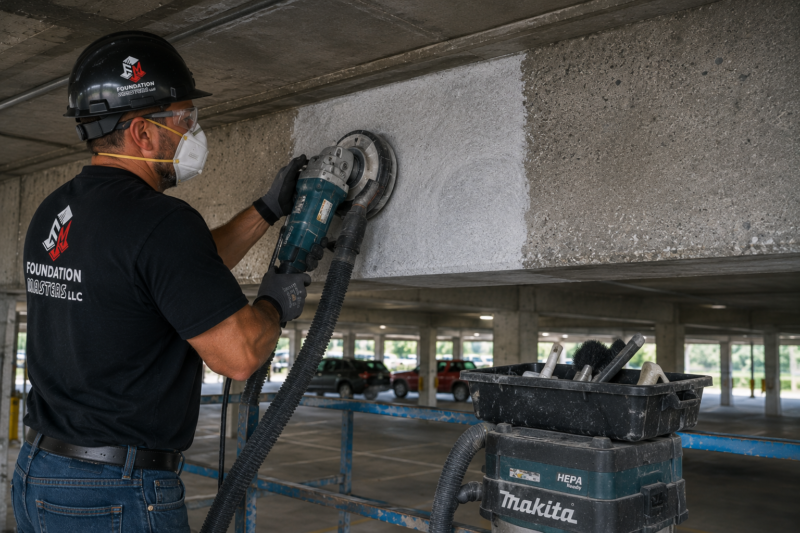
Remove unsound material and prepare the substrate to the applicable system requirements.
Mix & Saturate
Prepare compatible resin components and properly saturate the reinforcement.
Install & Consolidate
Position the CFRP as specified, consolidate the system and remove trapped air and excess resin.
Cure & Inspect
Protect the installation during cure and inspect the completed workmanship.
Technical Distinction
Installation guidance vs. structural design
Manufacturer product documentation establishes how a CFRP system is prepared, handled and installed. Where strengthening is intended to achieve a specified structural capacity, project-specific engineering may also be required to determine loads, reinforcement configuration, anchorage and the capacity of the strengthened member.
Installation & application requirements
Governed by the manufacturer’s Product Data Sheet:
- Surface preparation and concrete surface profile
- Material compatibility of fabric and resin
- Resin mixing and saturation
- Application and fiber placement
- Environmental conditions and minimum temperatures
- Curing, storage and inspection
Project-specific structural design
Where an engineered increase in capacity is intended, per ACI PRC-440.2-23:
- Existing member capacity
- Design loads and load combinations
- Flexural and shear demand
- Required CFRP contribution
- Number and orientation of plies
- Anchorage and development requirements
- Failure modes and strengthened-member capacity
On projects that call for engineered strengthening, Foundation Masters coordinates that project-specific structural design with the installation, so the finished work reflects both the manufacturer’s requirements and the structure’s engineering demands.
Product Safety
Proper installation & safe handling
CFRP systems use industrial epoxy resins, adhesives and related chemical products. They are handled according to the manufacturer’s current Product Data Sheet (PDS) and Safety Data Sheet (SDS).
Personal protection
Eye and skin protection, chemical-resistant gloves and appropriate clothing when mixing and applying epoxy resins, with adequate ventilation in the work area.
Handling & storage
Resin components mixed and stored per the manufacturer’s instructions, with proper handling and disposal of materials and containers.
Conditions & cure
Substrate preparation, minimum application temperatures and environmental limits, and protection of the installation through cure, as the system requires.
Manufacturer technical and safety documentation is authoritative for these details. Sika publishes current Product Data Sheets and Safety Data Sheets for its structural-strengthening systems at usa.sika.com. For example, the Sikadur® Hex-300 Product Data Sheet specifies substrate, mixing, application and temperature requirements and directs users to the corresponding SDS.
Systems & Standards
Established systems, recognized guidance
We install proven manufacturer systems and, where engineered strengthening is required, follow recognized design guidance.
Carbon-fiber fabrics
SikaWrap® uni- and bi-directional carbon-fiber fabrics used with Sikadur® resins to form the FRP system.
Epoxy resins & anchors
Sikadur® Hex-300 epoxy impregnating resin, with fiber anchors such as SikaWrap® FX-50 C where anchorage is required.
Design guidance
Engineered strengthening is designed per ACI PRC-440.2-23, the guide for the design and construction of externally bonded FRP systems for strengthening concrete structures.
Request a Structural Assessment
Tell us about your structure
Send us your drawings, photos and project goals. We’ll advise whether CFRP is appropriate, and how installation would be coordinated with project-specific engineering where that is required.
Foundation Masters, LLC · FL Engineering Certificate of Authorization #30969 · Office 813-614-1718. Where a project requires engineered strengthening, structural design is coordinated under a Florida-licensed Professional Engineer of Record as part of our design-build delivery. Manufacturer product and safety documentation governs installation and handling.