
High Rise Building Inspectors
Foundation Masters, LLC. Florida Certificate of Authorization CA# 30969. Structural inspections of Florida condominium and high rise buildings, signed and sealed by a licensed engineer, with the repair capability to follow through on what we find.

Since the Champlain Towers South collapse in 2021, Florida has treated aging condominium buildings very differently, and so have the people living in them. We hear from residents, boards and property managers every week about rust stains, spalling concrete, cracked balconies and garages that look worse every year. Some of it is cosmetic. Some of it is the early warning a building gives before something serious.
Foundation Masters inspects high rise and mid rise buildings from an engineering standpoint first. Jeff Earl leads the field investigation, and the report is signed and sealed by our licensed engineer of record. Because we also repair concrete, reinforce structure and stabilize foundations, the findings come from people who know what the repair will actually involve.
Florida Milestone Inspections
Under Section 553.899, Florida Statutes, condominium and cooperative buildings three stories or more must have a milestone inspection. The rules below are the statewide baseline. Your local building official can be stricter, so the notice from your county or city controls the dates for your building.
When It Is Due
By December 31 of the year the building reaches 30 years from its certificate of occupancy, then every 10 years. Local officials can require it at 25 years where conditions such as salt water exposure call for it.
Phase 1
A visual examination of habitable and non habitable areas, focused on the primary structural members. If there is no substantial structural deterioration, the inspection ends here.
Phase 2
Required when Phase 1 finds substantial structural deterioration. Closer investigation, which can include testing and opening up finishes, with a written repair plan.
Reporting
The sealed report goes to the local building official, and the association has to share a summary with unit owners and post it.
Repairs
Repairs identified in Phase 2 have to begin within 365 days of the report, unless the local official requires sooner.
Reserve Studies
Separately, associations in buildings three stories or more need a structural integrity reserve study every 10 years to plan and fund major repairs.
What We Look At
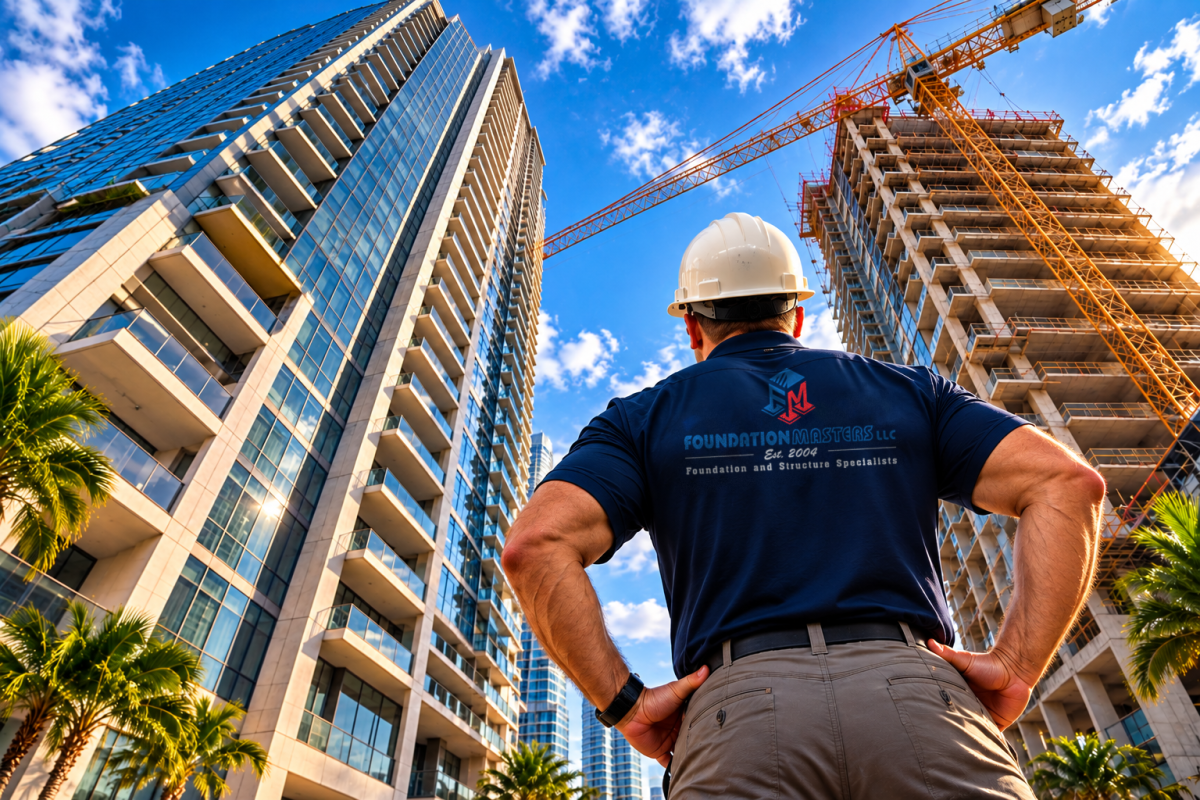
The Structure
- Columns, beams, slabs and shear walls
- Balconies, walkways and railings
- Spalling, delamination and exposed or corroded reinforcing
- Cracking patterns and what is driving them
- Roof structure and rooftop equipment supports
Where Problems Start
- Parking garages and below grade levels
- Pool decks and plaza decks over occupied space
- Waterproofing, drainage and water entry paths
- The foundation and signs of settlement
- Previous repairs that did not hold
After the Inspection
A report that only lists problems leaves the board guessing. Ours explains what each finding means, how urgent it is and what the repair involves, in language owners can follow. When repairs are needed, we can design and carry them out: concrete restoration, carbon fiber reinforcement, waterproofing and foundation work.
For buildings that need to be watched between inspections, our Building Health Network monitors movement and strain in real time. For the research behind how South Florida towers are founded and how they fail, see the Foundation Masters Research Center.
High Rise Inspection FAQs
Which buildings need a milestone inspection in Florida?
Condominium and cooperative buildings that are three stories or more. The first inspection is due by December 31 of the year the building reaches 30 years from its certificate of occupancy, and every 10 years after that. A local building official can move the first inspection up to 25 years where local conditions, such as salt water exposure, call for it, and many coastal jurisdictions do.
Who is allowed to perform a milestone inspection?
A Florida licensed engineer or architect. Foundation Masters runs the field investigation and documentation, and the inspection report is signed and sealed by our licensed engineer of record.
What is the difference between Phase 1 and Phase 2?
Phase 1 is a visual examination of the habitable and non habitable areas, focused on the primary structural members. If it finds substantial structural deterioration, a Phase 2 follows: closer investigation that can include testing, opening up finishes and measuring, with written repair recommendations.
What happens after a Phase 2 finds problems?
The association has to begin the required repairs within 365 days of receiving the Phase 2 report, unless the local official sets a shorter deadline, and the work has to be documented when it is done. Because we also repair concrete and foundations, the investigation and the fix can stay with one firm.
Is a milestone inspection the same as a structural integrity reserve study?
No. The milestone inspection looks at the condition of the structure today. The structural integrity reserve study, or SIRS, plans the money: the remaining life and replacement cost of roofs, structure, waterproofing, plumbing and other major items, and how the association funds them. Many associations schedule the two together because the field work overlaps.
I live in the building and I am worried about cracks or rust stains. What should I do?
Photograph what you are seeing and put your concern in writing to the board or management, asking for an engineering evaluation. Then call us. Rust stains, spalling concrete and cracks that keep growing are worth having looked at by an engineer rather than painted over.
Do you inspect parking garages, balconies and pool decks too?
Yes. Parking structures, balconies, walkways, pool decks and the foundation itself are where Florida buildings show deterioration first, because that is where water and salt get into the concrete.
Schedule a High Rise Inspection
Board member, property manager or resident, tell us about the building, its age and what you are seeing. Photos help.
Call (813) 614-1718Or send it in writing through the contact page.